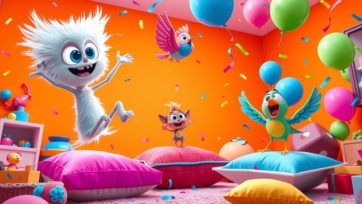
Holiday Special Kids Cartoons in 2025

Holidays are the perfect time for children to relax, have fun, and enjoy some educational entertainment. Holiday special kids cartoons for occasions like Eid, Christmas, and New Year are designed to combine fun, festive cheer, and learning in a colorful, animated format. These cartoons engage children with vibrant visuals, catchy songs, and playful characters while subtly teaching values, culture, and creativity. In this article, we will explore the importance of holiday cartoons, their educational benefits, and how parents can make the most of them during festive seasons.


Why Holiday Special Kids Cartoons Are Important:

Holiday cartoons are more than just entertainment. They provide opportunities for children to:

1. Learn Cultural Traditions:

Festive cartoons explain the meaning and traditions behind holidays like Eid, Christmas, and New Year. Children learn why families celebrate, how people share, and the joy of togetherness.

2. Develop Social Skills:

Many holiday cartoons feature teamwork, sharing, helping others, and celebrating with friends. This encourages social interaction and empathy in young viewers.

3. Boost Creativity:

Festive cartoons often include colorful decorations, music, and creative activities like making gifts or baking. Watching these inspires children to create their own art and participate in celebrations.

4. Build Positive Values:

Many holiday cartoons include moral lessons about kindness, generosity, gratitude, and patience. Kids learn important life values in a fun, memorable way.


Popular Holiday Special Kids Cartoons:

1. Eid Cartoons:

Eid cartoons teach children about the importance of sharing, gratitude, and family togetherness. Common themes include:

  • Children helping their parents prepare for Eid

  • Sharing gifts and sweets with friends and neighbors

  • Learning about prayers and cultural traditions

  • Friendly animal characters celebrating Eid

2. Christmas Cartoons:

Christmas cartoons focus on fun, gifts, decorations, and family. Popular themes include:

  • Santa Claus delivering presents

  • Children decorating Christmas trees and singing carols

  • Learning to be generous and kind to others

  • Magical adventures in snowy landscapes

3. New Year Cartoons:

New Year cartoons often combine celebration with reflection and planning. Themes include:

  • Fireworks and parties in animated cities

  • Characters making resolutions and setting goals

  • Celebrating achievements of the past year

  • Teamwork and cooperation to make New Year fun


Educational Benefits of Holiday Cartoons:

Holiday cartoons do more than entertain—they support learning in multiple ways:

1. Cultural Awareness:

Children understand why holidays are celebrated, helping them respect diversity and global traditions.

2. Language Development:

Cartoons with dialogues, songs, and rhymes help preschoolers improve vocabulary, pronunciation, and listening skills.

3. Social and Emotional Learning:

Watching characters share, celebrate, and solve problems teaches empathy, patience, and cooperation.

4. Creativity and Imagination:

Colorful visuals and fun storylines inspire children to craft decorations, draw, or play role-playing games.

5. Cognitive Skills:

Interactive cartoons may include counting gifts, recognizing shapes in decorations, or solving simple puzzles, strengthening early learning skills.


Tips for Parents to Use Holiday Cartoons Effectively:

1. Choose Age-Appropriate Cartoons:

Select cartoons suitable for your child’s age. Preschoolers need shorter, slower-paced videos, while older children can enjoy longer stories.

2. Watch Together:

Participate in the viewing experience. Discuss the story, ask questions, and encourage children to share their thoughts about celebrations.

3. Integrate Real-Life Activities:

After watching, engage children in holiday activities like decorating, drawing, or gift-making to reinforce lessons from cartoons.

4. Limit Screen Time:

Even educational cartoons should be watched in moderation. 20–30 minutes is ideal for preschool children.

5. Encourage Moral Reflection:

Ask children how the characters showed kindness, sharing, or gratitude. This reinforces social values in real life.


Why Parents Prefer Holiday Special Cartoons:

Parents prefer holiday-themed cartoons because they:

  • Provide safe, engaging entertainment

  • Teach important social, moral, and cultural values

  • Keep children busy during school breaks

  • Inspire creativity and family bonding

During Eid, Christmas, and New Year, these cartoons help children understand celebrations while learning positive behavior in an enjoyable way.


Conclusion:

Holiday special kids cartoons are a fantastic combination of fun, education, and festive cheer. They help preschoolers and young children learn about cultural traditions, values like sharing and kindness, and important social skills. Whether it’s Eid, Christmas, or New Year, these cartoons make celebrations exciting while fostering creativity, language development, and moral growth.

By incorporating holiday cartoons into daily routines, parents can ensure children enjoy meaningful entertainment that supports learning and personal development. With vibrant animations, catchy songs, and engaging stories, holiday cartoons create memorable experiences that children cherish long after the celebrations end.
Advertisement
How Booba Encourages Curiosity in Young Minds
Booba is a popular animated character loved by young children around the world. Unlike traditional cartoons with heavy dialogue, Booba relies on visual storytelling, expressions, and playful exploration. This unique style makes Booba especially effective in encouraging curiosity in young minds. Children naturally feel connected to Booba’s sense of wonder, which motivates them to observe, explore, and ask questions about the world around them. Curiosity is one of the most important skills in early childhood development. When children are curious, they learn faster, think deeper, and develop a lifelong love for learning. Booba plays a significant role in nurturing this curiosity through simple yet powerful storytelling. Why Curiosity Is Important for Young Children: Curiosity is the driving force behind learning. It encourages children to explore new ideas, understand cause and effect, and develop problem-solving skills. Curious children are more likely to ask questions, experiment, and stay engaged in learning activities. Developing curiosity at an early age helps children: Build critical thinking skills Improve attention and focus Enhance creativity and imagination Develop independence in learning Strengthen cognitive development Booba’s cartoon style aligns perfectly with how young children naturally learn—through observation and exploration. How Booba’s Visual Storytelling Sparks Curiosity: Booba cartoons use minimal or no spoken language, which encourages children to focus on actions rather than words. This visual storytelling pushes kids to observe closely and interpret what is happening on screen. When Booba interacts with everyday objects in unexpected ways, children become curious about outcomes. They begin thinking: What will happen next? Why did that happen? What is Booba trying to do? This constant engagement keeps young minds active and curious. Exploration of Everyday Objects: One of Booba’s strongest features is how he explores ordinary household items in creative ways. Simple objects like boxes, utensils, or toys become sources of adventure. This teaches children that learning does not always require complex tools. Everyday surroundings are full of opportunities for exploration. Kids start imitating Booba by experimenting with objects safely, which strengthens curiosity-driven learning. Encouraging Cause and Effect Thinking: Booba cartoons often show actions followed by immediate consequences. When Booba presses a button, pulls a lever, or mixes things, something happens. This helps children understand cause and effect relationships, which are essential for cognitive development. Kids begin to predict outcomes and test their assumptions, a key part of scientific thinking and problem-solving. Non-Verbal Learning and Observation Skills: Because Booba relies heavily on expressions, gestures, and movement, children sharpen their observation skills. They learn to read emotions, understand reactions, and interpret situations without spoken explanations. This strengthens: Visual perception Emotional understanding Attention to detail Concentration These skills are directly linked to curiosity, as observant children naturally want to know more. Freedom to Think Without Instructions: Unlike many educational cartoons that give direct instructions, Booba allows children to think independently. There are no obvious answers or explanations given. This open-ended style encourages children to: Form their own ideas Interpret situations differently Explore multiple possibilities Such freedom is essential for nurturing creative curiosity in young minds. Emotional Engagement Builds Interest: Booba’s expressive face and playful reactions create strong emotional connections with children. When kids emotionally connect with a character, they become more invested in what happens next. This emotional engagement keeps curiosity alive, making children eager to watch, learn, and explore further. How Parents Can Use Booba to Encourage Curiosity: Parents can turn Booba cartoons into meaningful learning moments by engaging actively with their children. Simple actions can increase the learning impact: Ask children what they think Booba is doing Encourage them to guess what might happen next Relate Booba’s actions to real-life situations Let children recreate safe experiments inspired by Booba These interactions help children express curiosity verbally and confidently. Benefits of Booba for Early Childhood Development: Booba supports several areas of early development, including: Curiosity and exploration Problem-solving skills Imagination and creativity Observation and focus Emotional understanding Because Booba uses simple visuals and slow pacing, it is especially suitable for preschool and early learners. Choosing the Right Balance of Screen Time: While Booba is beneficial, balanced screen time is important. Parents should ensure children also engage in physical play, reading, and real-world exploration. When used mindfully, Booba cartoons can enhance curiosity without overstimulation, making screen time productive and educational. Long-Term Impact of Curiosity-Based Learning: Children who grow up curious tend to perform better academically and socially. They become confident learners who enjoy discovering new things. By encouraging curiosity through cartoons like Booba, parents lay a strong foundation for: Lifelong learning Independent thinking Adaptability Creativity Conclusion: How Booba encourages curiosity in young minds is a perfect example of learning through simplicity. With visual storytelling, playful exploration, and emotional engagement, Booba naturally stimulates curiosity without pressure or instruction. When parents guide children thoughtfully, Booba becomes more than a cartoon—it becomes a tool for developing curious, confident, and creative young learners. Used wisely, Booba helps children explore the world with wonder and excitement, one small discovery at a time.
Best Kids Cartoons about Friendship in 2025
Friendship is one of the most important lessons children can learn early in life. In 2025, cartoon episodes about friendship have become a popular way to teach toddlers and preschoolers social skills, empathy, cooperation, and conflict resolution in a fun and engaging way. Animated stories make abstract concepts like sharing, kindness, and loyalty easy to understand for young children. By watching characters navigate friendships, kids learn through observation and relate lessons to their own lives. This guide explores the benefits of friendship-themed cartoons, highlights top series for 2025, and provides tips for parents to maximize learning. Why Friendship Cartoons Are Important for Kids: Children learn social behavior best through modeling and storytelling. Cartoon episodes can: Teach sharing and cooperation: Children see characters resolving conflicts and working together. Encourage empathy: Understanding how characters feel helps kids recognize emotions in themselves and others. Reinforce communication skills: Listening, speaking politely, and expressing feelings are highlighted in stories. Promote problem-solving: Characters face challenges and find solutions collaboratively. Provide safe guidance: Lessons are delivered in a child-friendly, positive environment. Friendship cartoons turn social learning into fun and memorable experiences, making important life skills easier to grasp. Key Friendship Lessons Taught Through Cartoons: Sharing and CooperationCharacters often share toys, snacks, or resources, teaching toddlers how to take turns and cooperate. Kindness and EmpathyStories show caring for friends, animals, or family, helping children understand feelings and compassion. Conflict ResolutionEpisodes demonstrate how friends handle disagreements calmly, showing kids healthy ways to resolve arguments. Loyalty and TrustChildren learn the importance of being reliable and trustworthy in friendships. Inclusion and DiversityCartoons often feature characters of different backgrounds, teaching children to value diversity and include others. Top Cartoon Series About Friendship for Kids in 2025: 1. Booba and Friends: Booba’s adventures now include episodes focused on teamwork, sharing, and helping friends. Why it’s popular: Non-verbal, accessible to all languages Engages toddlers with fun exploration Teaches observation and empathy 2. The Kindness Club: The Kindness Club emphasizes friendship, empathy, and emotional intelligence in playful stories. Learning benefits: Promotes caring, sharing, and cooperation Builds communication and listening skills Suitable for preschoolers and early school-age children 3. Super Simple Learning World: Friendship Edition: This series combines songs, stories, and animated characters to teach social skills and friendship lessons. Highlights: Interactive and engaging for toddlers Reinforces sharing, honesty, and kindness Uses colorful visuals and repetition for better retention 4. Little Hero Adventures: Animated mini-stories focus on friendship challenges, problem-solving, and teamwork. Key lessons: Encourages collaboration in small tasks Models empathy and understanding of others Short, engaging episodes suitable for young children 5. Animal Friends Stories: Animals are used to teach friendship, cooperation, and empathy in a fun and relatable way. Learning focus: Caring for friends and community Working together to solve problems Respecting differences and including everyone How Parents Can Enhance Learning: Parents play a crucial role in reinforcing friendship lessons: Watch together: Discuss friendship moments and ask, “What would you do?” Encourage role-play: Children can act out friendship scenarios to strengthen understanding. Repeat episodes: Repetition helps toddlers internalize social behaviors. Relate lessons to real life: Point out moments of sharing, helping, and cooperating in daily life. Combine with offline activities: Games, collaborative tasks, and story-building encourage teamwork. Recommended Cartoon Episodes About Friendship in 2025: Booba and Friends – Teamwork, sharing, and empathy The Kindness Club – Caring, inclusion, and emotional intelligence Super Simple Learning World: Friendship Edition – Songs and stories reinforcing social skills Little Hero Adventures – Problem-solving and collaboration Animal Friends Stories – Friendship, cooperation, and respect for diversity These series are safe, engaging, and educational, helping children develop essential social skills while enjoying colorful animated adventures. Final Thoughts: Cartoon episodes about friendship are more than entertainment—they are tools for social and emotional development. In 2025, animated stories combine fun, music, and colorful visuals to teach children how to share, empathize, resolve conflicts, and value relationships. Parents can maximize learning by: Watching and discussing episodes together Encouraging children to practice social skills in real life Using role-play and games to reinforce friendship lessons With the right series, screen time becomes a positive, educational experience, helping toddlers and preschoolers build strong social foundations and lifelong skills. Tip for Parents: Ask children to retell friendship stories in their own words, which improves comprehension, empathy, and communication.
How to Create a Kid-Safe Browser Profile
In today’s digital age, children often use the internet for learning, entertainment, and exploration. However, unsupervised browsing can expose them to inappropriate content and risks. Creating a kid-safe browser profile ensures that children have a protected, age-appropriate online experience while still enjoying the benefits of educational and fun websites. A kid-safe browser profile provides parents with control over content, privacy, and time limits, while giving children a safe space to learn and explore. With the right setup, children can access educational games, videos, and websites without being exposed to harmful material. Why a Kid-Safe Browser Profile is Important: Children are naturally curious, and the internet offers limitless information. A kid-safe browser profile is important because it: Blocks access to inappropriate content Restricts websites with harmful material Protects personal information and online privacy Limits screen time through parental controls Encourages safe online learning habits This protective setup balances freedom and security, allowing children to explore safely. Choosing the Right Browser for Kids: Not all browsers are equally suited for children. Some browsers offer built-in parental controls and kid-friendly interfaces. Consider the following: User-friendly interface suitable for children Pre-installed kid-safe filters and search engines Options for creating multiple profiles for different age groups Compatibility with educational apps and websites Popular kid-friendly browsers include Kiddle, KidZui, and Mozilla Firefox with parental extensions. Setting Up a Kid-Safe Profile: Creating a safe profile involves several steps: Create a separate user account for your child on the device Install a kid-friendly browser or enable parental controls on an existing browser Enable safe search settings to filter out inappropriate content Block adult websites and unsafe domains Set screen time limits to encourage healthy usage habits These steps ensure that children have a customized, safe browsing environment. Using Extensions and Filters: Many browsers allow parents to enhance security using extensions and filters. Useful features include: Content filtering to block unsafe websites Ad blockers to prevent unwanted advertisements Tracking protection to maintain privacy Activity reports to monitor browsing behavior These tools provide an extra layer of security and parental oversight. Adding Educational and Fun Websites: While safety is essential, children also need access to engaging and educational content. Parents can: Bookmark educational websites and games Allow access to child-friendly video platforms Introduce websites that teach science, math, reading, and creativity Create a curated list of safe resources This approach balances safety with learning and entertainment. Encouraging Responsible Browsing: A kid-safe browser is most effective when combined with guidance and rules. Parents should: Teach children not to share personal information Encourage asking permission before visiting new websites Discuss safe online behavior and digital etiquette Monitor usage periodically without being intrusive This guidance helps children develop good internet habits from an early age. Benefits of a Kid-Safe Browser Profile: A properly configured kid-safe browser profile offers numerous benefits: Protects children from harmful content Promotes age-appropriate learning Supports responsible and mindful internet use Reduces exposure to online scams and advertising Provides peace of mind to parents By combining technology with active supervision, parents create a safe digital environment that supports learning and exploration. Conclusion: Creating a kid-safe browser profile is an essential step in modern parenting and digital literacy. By selecting the right browser, enabling parental controls, using filters, and encouraging responsible usage, parents can ensure children explore the online world safely. This approach provides educational opportunities, fosters curiosity, and builds good internet habits, all within a secure and monitored environment.
Best Moral Stories for Kids with Animation
Learn with Fun in 2025 Teaching children good values and life lessons is a vital part of early education. In today’s digital age, animated moral stories for kids have become one of the most effective ways to teach ethics, empathy, and social skills while keeping learning fun and engaging. Animated moral stories combine colorful visuals, lively characters, and engaging narratives to help children understand right from wrong, develop emotional intelligence, and learn essential life lessons. In 2025, these videos are more popular than ever, offering parents a safe and interactive way to instill values in their children. This guide explores the benefits of animated moral stories, top series and videos for kids, and tips for parents to maximize learning from these stories. Why Moral Stories Matter for Kids in 2025: Stories have always been a powerful educational tool. With animation, stories come to life, making lessons memorable and relatable. Benefits of animated moral stories: Teaches values: Honesty, kindness, sharing, and respect. Emotional intelligence: Helps children understand feelings, empathy, and conflict resolution. Problem-solving skills: Characters face challenges, showing consequences of choices. Language development: Kids learn new words and sentence structures through storytelling. Safe entertainment: Stories are designed with age-appropriate lessons and positive messaging. By turning morals into entertaining narratives, children absorb values naturally without feeling like they are being “taught.” Top Moral Lessons Taught Through Animated Stories: Here are some common and essential moral lessons taught in animated stories for kids: Kindness and EmpathyStories that show characters helping others or showing compassion teach toddlers how to care for friends, family, and animals. Honesty and IntegrityAnimated tales about telling the truth help children understand why honesty matters and the consequences of lying. Sharing and CooperationThrough teamwork or sharing experiences, kids learn how to play and work well with others. Courage and ResilienceCharacters overcoming fears or challenges inspire children to face difficulties bravely. Respect and Good MannersStories highlight respecting elders, peers, and rules, reinforcing positive social behavior. Responsibility and Self-disciplineAnimated moral stories show children the importance of taking responsibility for actions and forming good habits. Top Animated Moral Story Series for Kids in 2025: 1. The Kindness Club: One of the most popular series in 2025, The Kindness Club teaches empathy, friendship, and sharing through playful characters and interactive stories. Why it’s popular: Engaging and relatable storylines Soft, colorful animation that appeals to toddlers Promotes emotional intelligence and social skills 2. Moral Tales with Booba: Booba’s curiosity-driven adventures are now infused with moral lessons. Children learn safety, honesty, and helping others while watching Booba explore the world. Benefits: Non-verbal and easy to understand for all languages Encourages observation and critical thinking Suitable for toddlers and preschoolers 3. ABC & Friends Life Lessons: Combining alphabet learning with moral lessons, this series uses fun stories and characters to teach values along with ABCs. Highlights: Teaches honesty, kindness, and cooperation Reinforces language skills Colorful, interactive visuals for toddlers 4. Super Simple Stories: Life Lessons: Super Simple Stories combines songs, rhymes, and animations to convey morals in a fun way. What kids learn: Sharing and caring Respect and empathy Following rules and helping friends 5. Little Hero Adventures: Animated mini-stories where small characters face challenges and learn courage, responsibility, and resilience. Key themes: Problem-solving and decision-making Bravery in small daily tasks Understanding consequences 6. Animal Tales for Kids: Stories featuring animals teach moral lessons in an entertaining way, often making values easier for children to understand. Learning benefits: Sharing and friendship through animal adventures Respect for nature and animals Promotes teamwork and kindness How to Choose the Right Animated Moral Stories: When selecting moral story videos for kids, parents should consider: Age-appropriate content – Stories should match your child’s understanding. Positive messaging – Avoid content with negative stereotypes or violence. Engaging visuals – Bright colors and fun characters hold attention. Short duration – Toddlers learn better from 5–10 minute videos. Interactive elements – Songs, rhymes, and prompts encourage participation. Trusted sources – Use safe platforms like YouTube Kids or educational websites such as boobacartoon.com. Tips for Maximizing Learning with Moral Stories: Watch together – Parents can reinforce the lessons and answer questions. Discuss the story – Ask your child “What would you do?” to encourage critical thinking. Repeat favorites – Repetition strengthens understanding and retention. Combine with real-life practice – Encourage children to act on lessons like sharing or helping. Mix with other learning videos – Pair moral stories with ABC, numbers, or colors for a well-rounded early education. Recommended Moral Stories for Kids in 2025: The Kindness Club – Empathy, sharing, and friendship Moral Tales with Booba – Safety, honesty, and helpfulness ABC & Friends Life Lessons – Values combined with alphabet learning Super Simple Stories: Life Lessons – Songs, rhymes, and morals Little Hero Adventures – Courage, resilience, and responsibility Animal Tales for Kids – Friendship, teamwork, and respect for animals These series are safe, engaging, and educational, making moral lessons fun and memorable for toddlers and preschoolers. Final Thoughts: Animated moral stories are more than just entertaining videos—they are powerful tools for teaching values, empathy, and social skills. By choosing the right series, parents can help their children develop emotional intelligence, good habits, and decision-making skills while enjoying bright and playful animations. In 2025, with a wide variety of animated moral stories available, parents have endless options to make screen time educational and enriching. Mix and match stories, discuss lessons, and encourage real-life practice to give your child a strong foundation for ethical and emotional development. Tip for Parents:  Encourage children to retell the stories in their own words—this reinforces memory, comprehension, and moral understanding.
How to Create a Booba Treasure Hunt at Home
A Booba treasure hunt is a fun, interactive, and educational activity for children. Inspired by Booba’s playful adventures, this activity encourages problem-solving, creativity, teamwork, and physical activity. Setting up a Booba-themed treasure hunt at home is easy, safe, and provides hours of entertainment for kids aged 3–8. This guide explains step-by-step how to create a Booba treasure hunt, along with tips for making it educational and exciting. Why Booba Treasure Hunts Are Perfect for Kids: Engaging and Fun: Booba’s playful personality makes kids excited to participate. Educational: Develops problem-solving, observation, and critical thinking skills. Physical Activity: Encourages children to move around safely indoors or in the backyard. Teamwork & Social Skills: Promotes cooperation when children play together. Materials Needed: Booba-themed clues or cards (printable or handmade) Small toys, treats, or Booba-themed items for treasures Baskets or containers for collecting treasures Paper, markers, and crayons for clues Optional: Booba masks or plush toys for added fun Step-by-Step Guide to Creating a Booba Treasure Hunt: 1. Plan the Treasure Hunt Area Choose a safe space indoors or in the backyard. Identify locations for hiding clues: under pillows, behind doors, near toys, or in containers. Make sure hiding spots are accessible and safe for children. Educational Tip: Discuss spatial awareness and location terms (under, behind, next to). 2. Create Booba-Themed Clues Write simple riddles or draw pictorial clues that lead to the next location. Use Booba characters, objects, or favorite items in the clues. Keep clues age-appropriate: Preschoolers: simple picture clues Older children: easy riddles or word clues Educational Tip: Boosts reading, comprehension, and problem-solving skills. 3. Hide the Clues and Treasure Place clues sequentially, each leading to the next. Hide the treasure at the final location: a small Booba toy, treats, or stickers. Ensure clues are easy to find but still engaging. Fun Tip: Use bright colors and Booba stickers to make clues visually appealing. 4. Explain the Rules to Children Show children the first clue to start the adventure. Explain they must follow the clues to find the treasure. Encourage teamwork if multiple children are participating. Educational Tip: Introduces following instructions and sequencing. 5. Participate or Observe Adults can join as helpers or narrators to make the hunt more engaging. Encourage children to solve clues independently or with minimal hints. Celebrate progress at each clue to keep excitement high. Learning Tip: Teaches perseverance, patience, and logical thinking. 6. Incorporate Mini Challenges Add small tasks at clue locations, such as: Jump like Booba 5 times Draw a Booba character Solve a mini puzzle or riddle Educational Tip: Combines physical activity, creativity, and cognitive skills. 7. Conclude with a Treasure Reward The treasure can be a Booba toy, a small treat, or a certificate for completing the hunt. Encourage children to share or discuss their favorite parts of the adventure. Learning Tip: Reinforces positive reinforcement, sharing, and reflection. Educational Benefits of a Booba Treasure Hunt: Problem-Solving Skills: Clues require logical thinking and reasoning. Observation Skills: Children must notice details in their environment. Fine and Gross Motor Skills: Moving, bending, and reaching enhance coordination. Teamwork and Communication: Group hunts encourage collaboration and discussion. Creativity & Imagination: Booba-themed scenarios make the hunt playful and imaginative. Confidence and Achievement: Completing the treasure hunt boosts self-esteem. Tips to Make Booba Treasure Hunts More Fun: Use Multi-Character Themes: Include Booba, Spike, Loola, and Mr. Beak in clues. Colorful Clues and Treasure: Bright visuals attract children’s attention. Time Challenges: Add a playful time limit for older children. Story-Based Hunts: Create a mini adventure story featuring Booba’s quest. Photo Fun: Let children take photos or record videos of their treasure hunt journey. Final Thoughts: Creating a Booba treasure hunt at home is a fun, educational, and interactive activity that children will love. With simple clues, creative tasks, and colorful treasures, kids can enjoy Booba-inspired adventures while developing critical thinking, physical skills, and imagination. This activity is perfect for playdates, weekend fun, or birthday celebrations and ensures a memorable, engaging experience.
Cartoons That Teach Teamwork
Teamwork is an essential life skill that children need to develop from an early age. Animated cartoons can be an excellent medium for teaching young children how to collaborate, share responsibilities, and solve problems together. Through colorful characters, engaging storylines, and relatable scenarios, children learn the value of working with others in a fun and memorable way. Cartoons that emphasize teamwork often present challenges or adventures where characters must combine skills and ideas to achieve a goal. Watching these stories allows children to understand cooperation, empathy, and communication, all while being entertained. Why Teamwork is Important for Kids: Learning teamwork early helps children: Develop social and communication skills Understand the importance of sharing and fairness Build empathy and respect for others Learn conflict resolution Enhance problem-solving and critical thinking Cartoons make these lessons accessible and enjoyable by providing visual examples of cooperation that children can easily understand. How Cartoons Demonstrate Collaboration: Teamwork-focused cartoons often depict characters working together to solve a problem or complete a task. Children observe: Sharing responsibilities among group members Combining individual skills to achieve common goals Supporting friends when they struggle Celebrating success as a team These storylines teach children that collaboration is not only productive but also fun and rewarding. Promoting Communication and Listening Skills: Effective teamwork requires clear communication and active listening. Cartoons can demonstrate these skills by showing: Characters explaining ideas clearly Listening to others’ suggestions Negotiating or compromising to reach a solution Encouraging quieter characters to participate Young viewers learn to express themselves, consider others’ viewpoints, and work together respectfully. Problem-Solving Through Teamwork: Many teamwork-oriented episodes present challenges that cannot be solved alone. Children learn: To think creatively as a group To assign roles based on each character’s strengths To test solutions and adapt if something doesn’t work That failures are part of learning together This helps children internalize practical teamwork strategies that can be applied in real life. Building Empathy and Emotional Intelligence: Cartoons that focus on teamwork also teach empathy and emotional awareness: Recognizing when a friend is upset or needs help Encouraging positive reinforcement and praise Understanding the consequences of selfish behavior Appreciating the value of cooperation These lessons support both social and emotional development. Role of Fun and Play in Learning Teamwork: Teamwork-focused cartoons often incorporate games, sports, or adventures, which make collaboration more engaging. Children observe: Characters playing games that require joint effort Solving puzzles or completing quests together Celebrating milestones as a group This combination of play and learning reinforces the idea that teamwork is enjoyable and beneficial. Tips for Parents to Reinforce Teamwork Skills: Parents can maximize the impact of teamwork cartoons by: Watching episodes together and discussing character actions Encouraging children to reflect on how they can help friends or siblings Organizing small group activities or games to practice collaboration Praising cooperative behavior and shared problem-solving Active engagement ensures children internalize lessons and apply them in daily life. Choosing the Right Teamwork Cartoons: Parents should select shows that: Feature age-appropriate challenges and problem-solving Emphasize cooperation, empathy, and positive social interactions Avoid violence or overly competitive behavior Include relatable characters and situations Popular teamwork-oriented educational shows for preschoolers include Paw Patrol, Octonauts, and Team Umizoomi, which encourage collaboration in fun, safe settings. Conclusion: Cartoons that teach teamwork provide a fun and effective way for children to learn essential social skills. By observing characters collaborate, communicate, and solve problems together, children gain insights into cooperation, empathy, and shared success. When parents support this learning with discussion and practical activities, cartoons become more than entertainment—they become tools for nurturing teamwork, social intelligence, and confidence in young minds.
Why You Should Block Certain Cartoon Channels
Cartoons are a wonderful source of entertainment and learning for children, but not all cartoon channels are suitable for young audiences. Some content may contain violence, inappropriate language, or negative behavioral messages, which can impact a child’s development. Parents need to carefully monitor and, in some cases, block certain channels to ensure a safe and healthy viewing experience. Blocking unsuitable channels allows children to focus on age-appropriate content, learn positive behaviors, and enjoy cartoons without exposure to harmful material. Impact of Inappropriate Content on Children: Watching unsuitable cartoons can affect children in several ways: Encourage aggressive or inappropriate behavior Introduce complex themes beyond their understanding Create fear, anxiety, or confusion Influence negative attitudes toward others Distract from learning-focused activities By blocking these channels, parents can protect children’s emotional and cognitive development. Signs That a Cartoon Channel May Be Inappropriate: Parents should be alert to certain indicators when evaluating cartoon channels: Frequent violence, fighting, or bullying Use of inappropriate language or mature themes Characters displaying poor moral behavior without consequences Content that is overly fast-paced or overstimulating Shows that promote consumerism or unsafe habits Identifying these signs helps parents make informed decisions about what their children watch. Benefits of Blocking Unsuitable Channels: Blocking certain cartoon channels ensures children: Watch content aligned with their age and development Focus on educational and creative shows Develop positive social and emotional skills Avoid exposure to content that encourages aggression or fear Build a foundation for healthy screen habits This approach allows children to enjoy cartoons safely while learning valuable lessons. How to Select Safe Cartoon Channels: When choosing suitable channels, parents should consider: Shows that teach morality, empathy, and teamwork Educational content that promotes literacy, numeracy, or creativity Channels with bright visuals, friendly characters, and calm pacing Programs that reinforce positive social and emotional skills Some popular safe options include Sesame Street, Bluey, Daniel Tiger’s Neighborhood, and educational YouTube channels specifically designed for preschoolers. Tools and Techniques for Blocking Channels: Parents can use several tools to filter or block unwanted cartoon content: Parental control apps like Google Family Link, YouTube Kids, or Qustodio Browser and app-level content restrictions Device-based content filtering and screen time controls Creating custom playlists or approved channels These tools help ensure children have controlled access to safe content. Encouraging Positive Viewing Habits: Blocking inappropriate channels is only one step. Parents should also: Watch cartoons together and discuss lessons learned Encourage children to ask questions and express ideas Balance screen time with active, hands-on activities Praise curiosity and creativity while avoiding passive consumption Active engagement enhances learning and reinforces positive behavior. Conclusion: Blocking certain cartoon channels is essential for safe and effective learning through media. By monitoring content, using parental controls, and promoting age-appropriate shows, parents can protect children from harmful influences and ensure cartoons remain a source of fun, education, and positive social development. Safe cartoon viewing fosters healthy screen habits, creativity, and emotional growth, preparing children for both learning and social interactions.
10 Brain-Boosting Activities Inspired by Cartoons
Cartoons are not just entertaining; they can be a source of creative and educational inspiration for children. Many educational cartoons are designed to encourage problem-solving, critical thinking, and cognitive skill development. Parents can leverage these shows to create fun, brain-boosting activities at home that support learning through play. Here are 10 activities inspired by cartoons that can enhance your child’s brain development and vocabulary. 1. Storytelling and Role-Play: Cartoons often have engaging stories and memorable characters. Encourage your child to retell episodes or act out their favorite scenes. This activity improves vocabulary, creativity, and narrative skills. For example, after watching a show like Dora the Explorer or Paw Patrol, children can role-play characters, solve problems, and create their own adventures. This not only makes learning fun but also enhances imagination and social skills. 2. Word Games and Puzzles: Many cartoons introduce new words, phrases, or simple riddles. Turn this into interactive word games at home. Use flashcards, crossword puzzles, or matching games with words learned from cartoons. This strengthens memory, vocabulary, and problem-solving skills, while keeping children engaged in educational play. 3. Drawing and Coloring Activities: Cartoons are visually appealing, making them ideal for drawing and coloring exercises. Ask your child to draw their favorite characters or scenes. This activity improves fine motor skills, hand-eye coordination, and creativity, while allowing children to practice storytelling visually. Parents can also introduce new words related to colors, shapes, and actions during the activity. 4. Interactive Quizzes: After watching a cartoon episode, create simple quizzes about the story, characters, or moral lessons. Use multiple-choice or true/false questions to make it fun. Interactive quizzes enhance critical thinking, attention span, and comprehension skills, and make children more attentive to details in animated shows. 5. Memory Games: Many cartoons repeat phrases, rhymes, or sequences, which can be used for memory-boosting exercises. Encourage children to recall sequences of events or dialogue from their favorite shows. This activity strengthens working memory, focus, and language retention, making it easier for kids to learn and use new vocabulary. 6. Educational Craft Projects: Inspired by cartoon themes, children can create crafts, such as building models, making puppets, or designing simple props. For instance, after watching a show about animals, kids can make paper animals or masks. Craft projects boost problem-solving, creativity, and fine motor skills, while reinforcing knowledge and vocabulary related to the cartoon theme. 7. Music and Singing Activities: Many cartoons include songs and rhymes. Encourage children to sing along, dance, or create their own lyrics inspired by these songs. Music-based activities enhance memory, language development, and rhythm recognition, while making learning fun and interactive. It also helps children pronounce new words clearly. 8. Puzzle-Based Problem Solving: Cartoons often feature characters solving simple challenges or mysteries. Turn these scenarios into hands-on problem-solving games, like jigsaw puzzles, building blocks, or treasure hunts. This improves logical thinking, spatial awareness, and concentration, while teaching children to think creatively like their favorite cartoon heroes. 9. Science and Exploration Experiments: Some educational cartoons introduce basic science concepts. Use these as inspiration for safe and simple experiments at home. For example, shows about nature or animals can lead to planting seeds, exploring magnets, or observing insects. These activities boost curiosity, observational skills, and scientific vocabulary, turning cartoon inspiration into practical learning experiences. 10. Reading and Writing Exercises: Cartoons often feature stories, letters, or written messages. Encourage children to write their own short stories or letters based on episodes they watched. This reinforces writing, reading comprehension, and vocabulary acquisition. It also helps children connect visual storytelling with written language, strengthening their literacy skills. Tips for Parents to Maximize Learning: Select educational cartoons: Choose shows with clear language, problem-solving, and moral lessons. Limit screen time: Use cartoons as inspiration, not a passive activity; 30–60 minutes per day is ideal. Engage actively: Watch with your child, discuss new words, and encourage participation. Combine activities: Mix drawing, crafts, quizzes, and memory games to reinforce learning. Use bright and playful tools: Colorful materials and interactive props make activities more engaging and memorable. Conclusion: Cartoons are much more than entertainment—they are a powerful tool for brain development in children. By translating animated stories into hands-on activities, parents can boost cognitive skills, vocabulary, creativity, and problem-solving abilities. Integrating these 10 brain-boosting activities inspired by cartoons into your child’s routine transforms screen time into meaningful learning experiences, ensuring that fun and education go hand in hand. With creative play, interactive exercises, and storytelling, children can develop essential skills that last a lifetime—all while enjoying their favorite cartoons.